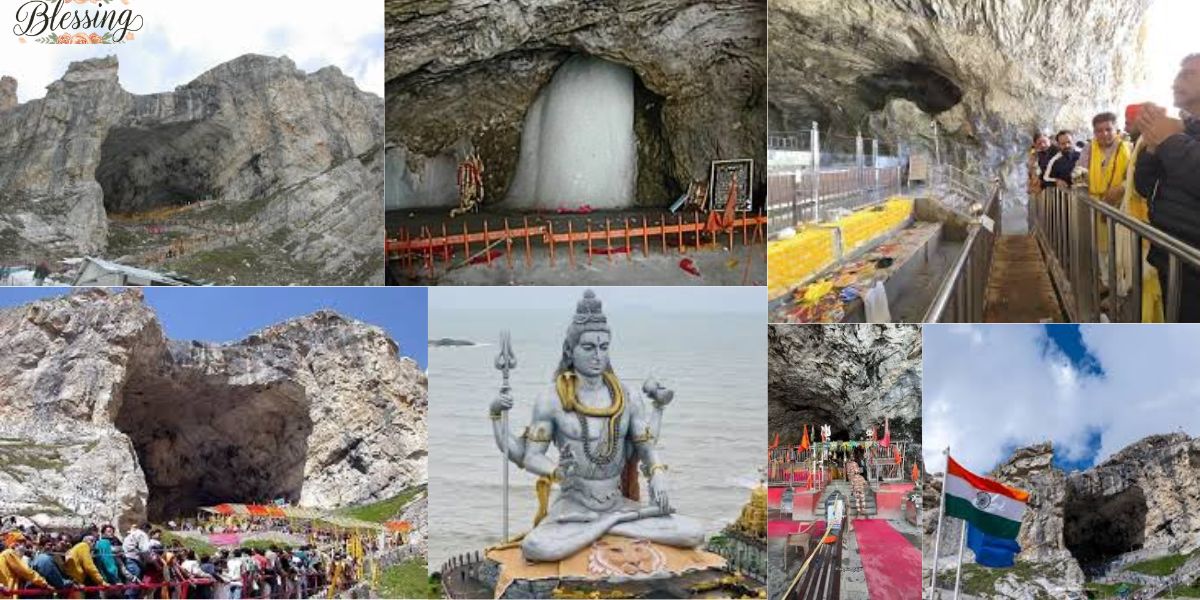
The Amarnath Cave Temple in Jammu and Kashmir is one of the holiest Hindu pilgrimage sites in India. It sits at an altitude of 3,888 meters and houses the sacred ice Shiva Lingam. Every year, millions of devotees chant Har Har Mahadev and walk through icy Himalayan paths to seek the blessings of Lord Shiva.
Quick Temple Info at a Glance
| Detail | Information |
| Temple Name | Shri Amarnath Cave Shrine |
| Deity | Lord Shiva (Ice Shiva Lingam) |
| Location | Jammu and Kashmir, India |
| Altitude | 3,888 meters (12,756 feet) |
| Yatra Season | June to August |
| Darshan Timings | 6:00 AM to 6:00 PM (Yatra Season Only) |
| Managed By | Shri Amarnathji Shrine Board (SASB) |
| Routes | Pahalgam (46 km) and Baltal (14 km) |
| Nearest Airport | Srinagar International Airport (~90 km) |
| Nearest Railway | Jammu Tawi Railway Station (315 km) |
| Major Festival | Shravan Purnima, Maha Shivaratri |
The Legend of Amarnath – The Secret of Immortality
The Amar Katha legend is the living soul of this sacred cave in Hinduism. Lord Shiva chose this remote cave to reveal the secret of immortality to Goddess Parvati.
This powerful Shiva Parvati divine story is why millions consider Amarnath the most sacred site in India. No other shrine carries such a deep and eternal connection to the concept of immortal life.
What Lord Shiva Left Behind Before Entering the Cave
Lord Shiva wanted complete silence and privacy before sharing the eternal secret. He released his Nandi bull at Pahalgam and the moon at Chandanwari.
He left his snakes at Sheshnag Lake and Lord Ganesha at Mahagunas Parvat. Even fire was surrendered at Panchtarni before Shiva entered the cave alone with Goddess Parvati.
The Immortal Pigeons of Amarnath
One of the most miraculous facts is that pigeons attained immortality at Amarnath by overhearing the divine secret.
A pair of pigeons secretly listened to the Amar Katha inside the cave. Because of this, they became immortal and are believed to still reside near the cave today.
Many pilgrims report seeing two pigeons during their visit, considered an extremely auspicious divine sign.
The Discovery of the Sacred Cave
The cave where Shiva told the secret of immortality was hidden from the world for many centuries. It was rediscovered in the 15th century by a shepherd named Butta Malik.
A holy saint gave him a bag of coal that miraculously turned into gold at his home. When he returned to thank the saint, he found the divine Amarnath Cave and the sacred ice Shiva Lingam instead.
The Malik Family and Shrine Management
After the discovery, the Malik family shrine management became a sacred tradition passed through generations.
The family was entrusted with caring for this divine site for hundreds of years. Today, the Shri Amarnathji Shrine Board (SASB) officially oversees all Yatra operations.
This blend of tradition and modern administration ensures every pilgrim has a safe and dignified experience.
The Spiritual Essence of the Ice Lingam
The ice Shiva Lingam inside the cave forms completely naturally without any human involvement.
Freezing water droplets fall from the cave ceiling and slowly build the sacred lingam every year.
What makes it extraordinary is that the ice lingam is formed by the lunar cycle, growing and shrinking with the phases of the moon.
The full moon ice lingam waxes and wanes, reaching peak height on Shravan Purnima and melting gradually after.
The Divine Family Inside the Cave
Next to the main ice Shiva Lingam, two smaller ice formations represent Mata Parvati and Lord Ganesha. Together, these three formations complete the divine family of Shiva inside the cave.
Devotees feel a unique emotional connection when they see the complete divine family formed purely by nature. This phenomenon is unlike anything found in any other temple across India.
Pahalgam Route vs Baltal Route – Complete Comparison
| Feature | Pahalgam Route (Traditional) | Baltal Route (Short) |
| Total Distance | 46 km | 14 km |
| Trek Duration | 3 to 5 Days | 1 to 2 Days |
| Difficulty Level | Moderate | Steep and Tough |
| Scenic Beauty | Very High | Moderate |
| Major Stops | Chandanwari, Sheshnag, Panchtarni | Direct – no major stops |
| Best For | Families, first-timers, seniors | Experienced trekkers only |
| Helicopter Available | Yes – from Pahalgam | Yes – from Baltal base camp |
| Medical Camps | Multiple camps along route | Limited medical support |
| Overall Experience | Rich, scenic, spiritually immersive | Fast, intense, challenging |
The Holy Amarnath Yatra
The Amarnath Yatra is the most spiritually powerful Himalayan pilgrimage route in all of India.
Organized every year by the Shri Amarnathji Shrine Board, the Yatra lasts 45 days in the Shravan month.
It typically begins in June or July and draws millions of devoted pilgrims from across the country.
The chants of Har Har Mahadev echo across every valley, glacier, and mountain on this sacred path.
The Pahalgam Trekking Route – The Traditional Path
The Pahalgam trekking route is the traditional and most popular way to reach the cave. It covers 46 km, passing through Chandanwari glaciers, the Pissu Top trek, Sheshnag Lake trek, and the Panchtarni campsite.
This route takes 3 to 5 days and is ideal for pilgrims who want the full spiritual and scenic experience. Families, senior pilgrims, and first-timers should always choose this route for safety and comfort.
The Baltal Base Camp – Fast but Fierce Route
The Baltal base camp route is only 14 km but involves a steep and demanding climb. Experienced trekkers who want a quick darshan prefer this direct route.
Most pilgrims complete it in just one or two days. Helicopter service from Baltal to Panchtarni is also available for those who cannot undertake the full trek on foot.
Natural Beauty and Divine Serenity
The path to the Jammu Kashmir mountain shrine is as divine as the destination itself. Pilgrims walk through alpine meadows of Kashmir, frozen glaciers, cascading streams, and towering snow-covered peaks.

Every turn in the landscape feels like a painting crafted by nature for the devoted soul. The fresh mountain air and deep silence make the journey profoundly meditative from the very first step.
Why the Trek Itself Is a Spiritual Transformation
Pilgrims who have completed the Yatra say the trek changes them from deep within. Walking for hours while chanting Har Har Mahadev naturally strips away all worldly worries.
The physical hardship of the trail becomes a powerful metaphor for the soul’s journey toward the divine.
Many return from this high altitude temple in India not just spiritually fulfilled, but emotionally reborn as a new person.
Health Precautions and Altitude Sickness – What Doctors Recommend

Doctors recommend beginning acclimatization at least two days before starting the trek. Acute Mountain Sickness (AMS) symptoms include headache, nausea, dizziness, and shortness of breath.
SASB-approved physicians advise carrying Diamox (Acetazolamide) only after consulting your personal doctor first. Descend immediately if symptoms worsen — no darshan is worth risking your life.
Festivals and Celebrations
The Maha Shivaratri celebration is one of the most important annual events tied to the Amarnath shrine.
The grandest moment of the year is Shravan Purnima, when the ice Shiva Lingam reaches its complete natural peak form.
The Chhari Mubarak procession, led by the head priest, marks the formal beginning and culmination of the sacred Yatra. Devotees gather in hundreds of thousands to witness and be part of this living spiritual tradition.
Read More: Gnana Saraswati Temple, Basara – Temple Timings, Info
The Chhari Mubarak – The Holy Mace Procession
The Chhari Mubarak procession is a centuries-old Amarnath tradition that no other temple in India possesses.
The holy silver mace of Lord Shiva is carried by the head priest on foot from Srinagar all the way to the cave.
It arrives at the shrine on Shravan Purnima, the single most auspicious day of the entire Yatra. This living procession deeply connects the ancient divine legend with the devotion of millions today.
Best Time to Visit Amarnath Temple
The best time to visit Amarnath is between July and August during the peak Yatra season. This high-altitude temple in India sits under several feet of snow during all other months.
During the Yatra season, temperatures range between 10°C and –5°C — cold but manageable with proper layered clothing.
The ideal darshan window is early morning between 6 AM and 9 AM, when the crowd is minimal, and the spiritual energy is at its purest.
Important Travel Tips for Amarnath Yatra
Understanding the medical fitness requirements for Amarnath is the first and most critical step in Yatra planning.
The high-altitude terrain demands that every pilgrim be in good physical health well before starting.
A medical certificate and Amarnath Yatra registration are both compulsory requirements without any exception.
Start physical training, especially walking and breathing exercises, at least 4 to 6 weeks before your Yatra departure date.
Mandatory Registration and Medical Certificate Process
SASB online registration is available on the official Shri Amarnathji Shrine Board website and at authorised bank branches across India.
A valid Yatra medical certificate must be obtained from a certified SASB-approved doctor before applying.
This certificate confirms your fitness for high-altitude trekking and is strictly checked at all Yatra entry points. Without both of these documents, pilgrims are not permitted to proceed on either route.
Essential Packing Checklist for the Yatra
Carry these essentials for a safe journey: warm layered clothing with a waterproof jacket, sturdy trekking shoes with ankle support, a rain poncho for sudden weather changes, medicines for altitude sickness and cold, energy snacks, dry fruits, oral rehydration salts, Yatra registration card, valid government ID proof, and a personal first-aid kit with prescription medicines.
What the Amarnath Shrine Board Says – Official Rules and Restrictions
The SASB strictly prohibits pilgrims above 75 years and below 13 years from undertaking the Yatra.
Photography and videography inside the cave are completely banned by official SASB order. Carrying plastic bags, alcohol, and non-vegetarian food is strictly forbidden on both routes.
Every pilgrim must carry their original Yatra permit and government-issued photo ID at all checkpoints.
Temple Timings – Amarnath Darshan Schedule
| Period | Darshan Timings | Status |
| June to August (Yatra Season) | 6:00 AM to 6:00 PM | Open for all registered pilgrims |
| September to May | Closed | Cave sealed under deep snow |
| Shravan Purnima Day | Special extended hours possible | Most auspicious day of the Yatra |
| Best Darshan Window | 6:00 AM to 9:00 AM | Least crowd, most peaceful |
Amarnath darshan timings are strictly 6 AM to 6 PM during the Yatra season only. Always verify the latest schedule on the SASB official website before departure.
No darshan is permitted outside these official hours. Plan to arrive at the cave early in the morning for the most peaceful and crowd-free experience.
How to Reach Amarnath Temple
Reaching this Jammu Kashmir mountain shrine requires advance planning across multiple transport modes. The nearest airport is Srinagar International Airport, approximately 90 km from Pahalgam.

The nearest major railway station is Jammu Tawi Railway Station, located 315 km from the trekking start points. From both points, regular buses and private taxis connect pilgrims to Pahalgam or Baltal.
How to Reach Amarnath Cave by Helicopter
The helicopter service from Baltal and Pahalgam is the best option for elderly or physically challenged pilgrims.
Helicopters drop pilgrims at Panchtarni, which is just 6 km from the cave on foot. This option cuts the journey to a single day and significantly reduces physical strain.
Book helicopter seats well in advance through the official SASB portal, as they fill up extremely fast every season.
Read More: Bageshwar Dham Chhatarpur Temple Timings, Online Registration, Token Booking & Divya Darbar Guide
Road Route from Srinagar to Pahalgam
The Srinagar to Pahalgam distance is around 90 km by road and takes approximately 2.5 to 3 hours.
Regular government and private buses operate daily from Srinagar’s Tourist Reception Centre throughout the season.
Shared taxis are also widely available and faster than buses. From Pahalgam, the official 46 km Pahalgam trekking route begins at Nunwan base camp.
Emergency Contacts and Safety Helplines for Amarnath Yatra
The SASB helpline number is 0194-2313149 for all Yatra-related emergencies. The J&K Police control room can be reached at 100 from any mobile network.
medical camps are stationed at Sheshnag, Panchtarni, and Baltal along both routes. Save all numbers offline before starting the trek, as signals are unreliable in high-altitude zones.
Personal Opinion and Recommendation
The Amarnath Yatra is not just a pilgrimage. It is a test of faith, body, and soul together. The sight of the natural ice Shiva Lingam waxing with the full moon genuinely moves even the most logical mind. My strong recommendation is to always choose the Pahalgam trekking route for a safer and spiritually richer experience.
Frequently Asked Questions
What is the significance of the Amarnath Cave?
It is the cave where Shiva told the secret of immortality, the Amar Katha, to Goddess Parvati.
What time does the Amarnath Temple open for darshan?
Amarnath darshan timings are 6:00 AM to 6:00 PM during the Yatra season (June to August) only.
Is Amarnath Cave open all year?
No. The cave remains closed under deep snow from September to May every year.
Which is the easiest route to the Amarnath Cave?
The Pahalgam trekking route (46 km) is the easiest and most suitable for families and first-time pilgrims.
What is the difference between the Pahalgam and Baltal routes?
Pahalgam is 46 km, moderate, and scenic. The Baltal base camp route is 14 km, but steep and only for experienced trekkers.
Conclusion
The Amarnath Cave Temple is one of the most extraordinary spiritual sites on earth, a high-altitude temple in India where nature itself becomes the architect of the divine. From the natural ice Shiva Lingam that responds to the lunar cycle, to the legend of pigeons who attained immortality at Amarnath, every detail of this shrine is beyond ordinary.

Alich, a skilled content writer with 3+ years of experience, known for creating clear guides and 1000+ published articles across multiple niches.