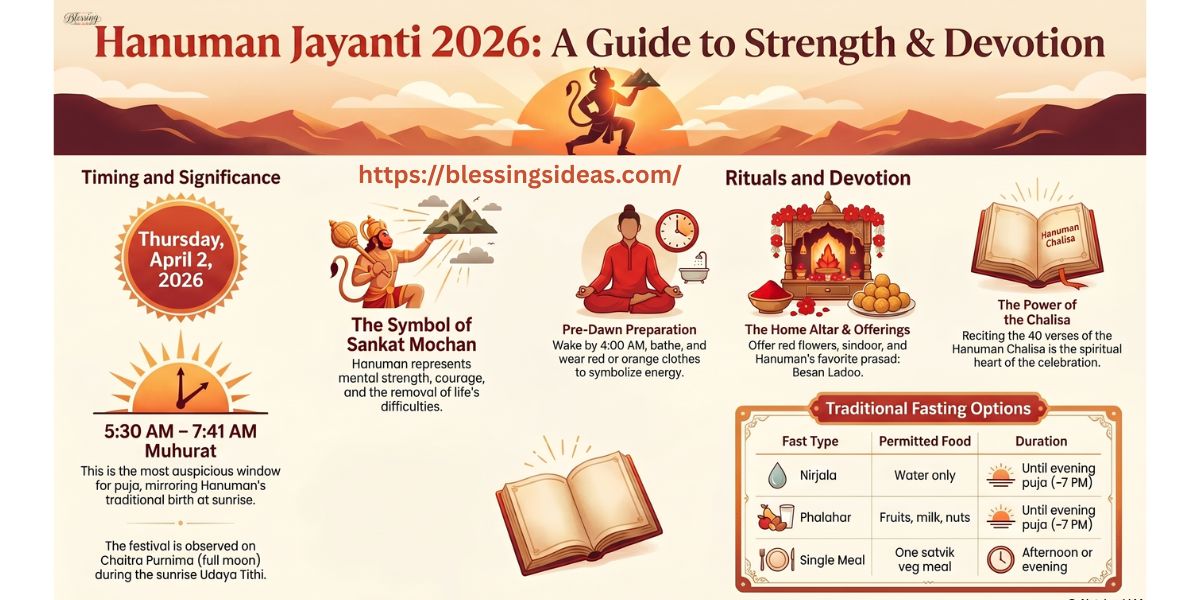
Hanuman Jayanti 2026 falls on Thursday, April 2, marking the sacred birth anniversary of Lord Hanuman. The eternal symbol of strength and devotion. Millions of devotees celebrate this Hindu festival with puja, fasting, and Hanuman Chalisa recitation. At BlessInsideas, we guide you through everything you need to celebrate meaningfully.
When is Hanuman Jayanti 2026? (Date & Time)
Hanuman Jayanti 2026 is one of the most auspicious days in the Hindu calendar. It is observed on Chaitra Purnima, the full moon of the month of Chaitra. Knowing the exact date and Hanuman birth time muhurat helps you plan worship correctly.
This year, the festival holds extra significance because it falls on a Thursday (Guruvar), a day already sacred to devotion and wisdom.
Exact Date and Day
Hanuman Jayanti 2026 is celebrated on Thursday, April 2, 2026. The Purnima Tithi begins at 7:06 AM on April 1 and ends at 7:41 AM on April 2.
Since the full moon is present at sunrise on April 2 (Udaya Tithi principle), this day is universally accepted for the main celebration. The Hanuman Jayanti date in the Hindu calendar corresponds to Chaitra Purnima 2026.
Hanuman Birth Time and Muhurat
According to tradition, Lord Hanuman was born at sunrise on Chaitra Purnima. The most auspicious puja muhurat is between 5:30 AM and 7:41 AM on April 2.
Many devotees wake by 4:00 AM to bathe and prepare before the sacred window opens. Evening prayers after moonrise (around 6:45 PM) are equally powerful for those who cannot join morning rituals.
Chaitra Purnima Connection
Chaitra Purnima is not just a full moon , it is a peak of divine energy in Hindu cosmology. The full moon represents completeness and illumination.
Hanuman’s birth on this day symbolizes his role as Sankat Mochan, the remover of darkness and difficulties.
Chaitra Purnima 2026 also marks the arrival of summer in the traditional calendar, signaling new spiritual beginnings.
The Sacred Story: Hanuman’s Birth and Significance
Understanding the Lord Hanuman birth story deepens your connection to this festival. Every detail of his origin, from Anjana Mata’s penance to Vayu Dev’s grace, carries spiritual meaning.
This section covers what competitors often mention only briefly. At BlessInsideas, we give you the full picture.
Birth Legend of Lord Hanuman
Anjana Mata, a celestial apsara cursed to live as a monkey, performed intense penance to receive a son.
At the same time, King Dasharatha in Ayodhya received sacred prasad to bless him with sons. Vayu Dev, the wind god, carried a portion of that prasad to Anjana’s outstretched hands as she meditated.
Hanuman was born at sunrise and immediately leaped toward the sun, mistaking it for a fruit.
This is why he is called Pawanputra (son of wind) and Kesari Nandan (son of Kesari). His story is found in both the Valmiki Ramayana and Tulsidas’s Ramcharitmanas.
Why Hanuman Jayanti Matters to Devotees
Hanuman is the perfect Ram bhakt , devoted, humble and selfless. He could move mountains yet chose service.
For modern devotees, he represents mental strength from Hanuman worship during anxiety, focus during exams and courage before life’s challenges.
The Hindu festival of strength and devotion resonates because his qualities are timeless. Sankat Mochan literally means “remover of troubles,” and millions invoke his name exactly for that.
Regional Variations in Celebration
Regional celebration of Hanuman Jayanti in India varies widely. North India observes it on Chaitra Purnima (April 2, 2026).
Andhra Pradesh and Telangana celebrate a remarkable 41-day Hanuman Deeksha starting April 2 and ending around May 12.
Tamil Nadu and Kerala celebrate in the Margazhi month (December–January). Despite the different dates, devotion remains the unifying thread across all regions.
How to Celebrate Hanuman Jayanti 2026: Complete Guide
Wondering how to celebrate Hanuman Jayanti at home? This complete guide walks you through every step.
From early morning rituals to temple darshan on Jayanti, BlessInsideas has you covered. Most competitors skip the practical details, we don’t.
Early Morning Rituals (4 AM – 7 AM)
Wake by 4:00 AM to begin your preparation. Take a purifying bath add turmeric or a few drops of Ganga jal if available.
Wear clean clothes in red or orange, the colors associated with Bajrangbali. Spend a few quiet minutes setting your intention, strength, humility, or service. The pre-dawn atmosphere is spiritually unmatched for devotion.
Read More: Karungali Mala Benefits: 21 Powerful Reasons to Wear Ebony Wood Mala (Complete Guide 2026)
Puja Vidhi: Step-by-Step Worship Method
How to perform Hanuman puja at home is simpler than most think. Follow this clear Hanuman puja vidhi step by step for a meaningful experience.
Intention matters more than technical perfection. Even a beginner can perform a complete and heartfelt puja with the right guidance.
Setting Up Your Home Altar
Find a clean, quiet corner. Place Hanuman’s image or idol on a raised surface facing east or north. Lay a fresh cloth underneath.
Clean the area thoroughly before beginning. A simple, neat space creates the right atmosphere for diya jalana and worship.
Essential Puja Materials
Gather these items before you begin:
- Fresh red flowers (hibiscus or marigolds)
- Incense sticks or dhoop
- Small diya with sesame oil or ghee
- Sindoor (vermillion) for sindoor chadhana
- Besan ladoo or fruit for prasad
- Small bell and clean water
- Tulsi leaves (if available)
The Worship Sequence
- Invocation: Light the diya and incense. Ring the bell. Invite Hanuman’s presence mentally.
- Water Offering: Sprinkle water around the altar. Chant “Om Hanumate Namah”.
- Flower Offering: Offer flowers one by one at his feet.
- Sindoor Chadhana : Apply sindoor to the idol. Apply a tilak to your own forehead.
- Prasad : Present sweets or fruits with devotion.
- Aarti: Wave the diya in circles while singing Hanuman aarti.
- Hanuman Chalisa: Recite at least once. This is the heart of the puja.
- Closing Prayer : Bow with folded hands. Distribute prasad to family.
Fasting Guidelines for Hanuman Jayanti
Fasting rules on Hanuman Jayanti are flexible and personal. Choose the option that suits your health and schedule:
| Fast Type | What You Can Eat | Break Time |
|---|---|---|
| Nirjala (Complete) | Water only | After evening puja (~7 PM) |
| Phalahar Vrat | Fruits, milk, nuts, coconut water | After evening puja |
| Single Meal | One satvik vegetarian meal | Afternoon or evening |
| Modified (Working Professionals) | Fruits in morning, break fast in evening | After evening puja |
Who should NOT fast: Children under 12, pregnant women, diabetics, elderly with health conditions. Your health is a divine blessing, protect it.
Temple Darshan: Making the Most of Your Visit
Temple darshan on Jayanti is most powerful between 5:30 AM and 7:00 AM. Arrive early to experience the special morning aarti with fewer crowds.
Bring flowers, a coconut, and prasad for offering. Dress modestly, shoulders and knees covered. Keep your phone on silent inside the main shrine.
After darshan, participate in the bhandara (community meal) if available, that is seva in action.
Hanuman Chalisa: The Heart of Jayanti Celebration
The Hanuman Chalisa, composed by Goswami Tulsidas, is 40 verses of pure devotion. Sunderkand paath and the Chalisa together form the spiritual backbone of Jayanti. BlessInsideas recommends making Chalisa recitation your anchor for the day, everything else flows from it.
Read More: Yadagirigutta Temple Timings 2026 – Plan Before You Go!
Best Time to Read Hanuman Chalisa on Jayanti
The best times to recite the Chalisa on Hanuman Jayanti 2026:
- Sunrise (Brahma Muhurta) : Most auspicious; mirrors Hanuman’s birth time
- 11 times across the day : Spread morning, afternoon, and evening
- 108 times : For dedicated practitioners; requires full-day commitment
- Once in the evening : Perfectly valid for busy schedules
Mangalvar (Tuesday) is traditionally the weekly Hanuman worship day. On Jayanti, any recitation carries amplified merit. Group recitation at your temple or through virtual sangats creates collective spiritual energy.
Benefits of Reciting Hanuman Chalisa
Hanuman Chalisa benefits reported by devotees across generations include:
- Spiritual: Removes obstacles, deepens bhakti, purifies intentions
- Mental: Reduces anxiety and fear; the rhythmic verses create calm focus
- Traditional belief: Invokes Sankat Mochan’s protection from negativity
- Modern perspective: Focused recitation is a proven stress-reduction practice
Reciting Bajrang Baan and Hanuman Ashtak alongside the Chalisa deepens the worship further.
Special Hanuman Jayanti Prasad Recipes
Besan ladoo for prasad is Lord Hanuman’s most beloved offering. Making prasad with your own hands is itself a devotional act. BlessInsideas shares the traditional recipe competitors rarely include in full.
Traditional Besan Ladoo (Lord Hanuman’s Favorite)
Ingredients:
- 2 cups besan (gram flour)
- 1 cup powdered sugar
- ½ cup ghee
- ¼ cup mixed dry fruits (almonds, cashews)
- 2 tbsp raisins
- ½ tsp cardamom powder
Steps:
- Heat ghee in a heavy pan on low flame. Add besan. Stir continuously for 20–25 minutes until golden and aromatic.
- Add dry fruits. Stir 2–3 more minutes. Remove from heat.
- Cool for 10 minutes. Add sugar and cardamom. Mix well.
- While still warm, shape into round balls. If crumbly, add a little warm ghee.
- Cool completely. Offer the first ladoo to Hanuman before distributing.
Other Sacred Offerings
Offerings for Lord Hanuman don’t need to be elaborate:
- Fresh fruits (bananas, pomegranates, apples)
- Whole coconut
- Panjiri : roasted wheat flour with sugar, ghee, and dry fruits
- Store-bought ladoos or pedas (devotion matters, not the source)
- Panchamrit for abhishekam (milk, yogurt, honey, ghee, sugar)
Sharing prasad with neighbors and strangers is highly auspicious, it embodies Hanuman’s spirit of selfless giving.
First-Time Celebrating? Beginner’s Guide to Hanuman Jayanti
Can non-Hindus celebrate Hanuman Jayanti? Yes, with genuine respect and openness. BlessInsideas welcomes every sincere devotee, regardless of background.
This section covers what first-timers need most. Most competitor articles assume prior knowledge, we don’t.
Understanding the Basics
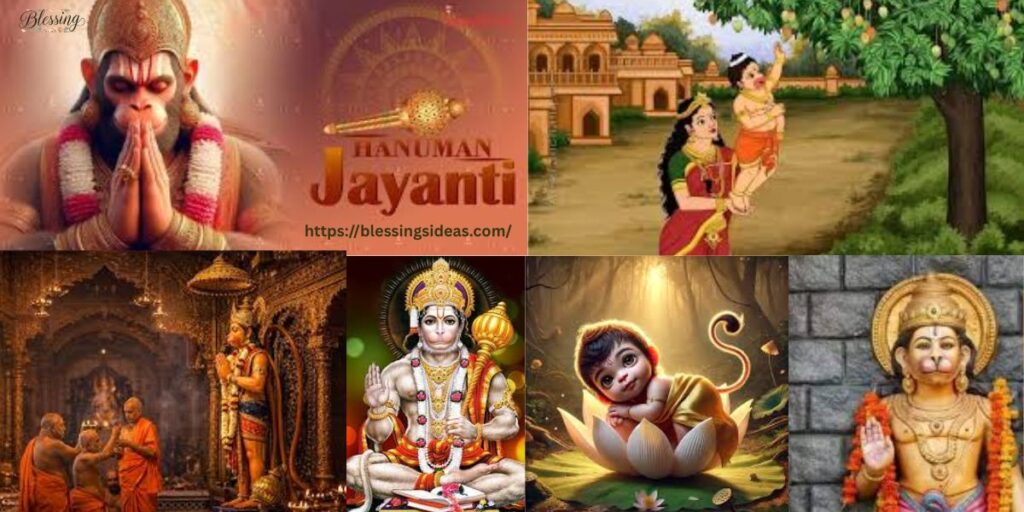
Who is Hanuman? He is the ultimate devotee, powerful yet humble, fearless yet gentle. He is depicted with a monkey face, carrying a mace, often shown kneeling before Ram and Sita.
He is called Pawan Kumar, Anjani Putra, Kesari Nandan, and Bajrangbali across different traditions. His story appears in the Valmiki Ramayana and Tulsidas’s Ramcharitmanas.
Simple 30-Minute Celebration at Home
Short on time? Here is a meaningful 30-minute celebration:
- 5 min: Clean a space. Place Hanuman’s image (a phone wallpaper works).
- 15 min: Light a candle. Offer one flower. Say a sincere prayer. Play Hanuman Chalisa audio.
- 10 min: Write down one quality of Hanuman’s you want to develop this year.
That simple act of intention is more valuable than any elaborate ritual done without heart.
Common Questions First-Timers Ask
What color should I wear on Hanuman Jayanti? Red or orange are traditional. Clean, modest clothing in any color is perfectly fine.
Can I pray in English? Absolutely. Devotion in any language reaches Sankat Mochan equally. What if I make mistakes? There are no “mistakes” in sincere bhakti. Continue with love.
Regional Celebration Differences Across India
Regional celebration of Hanuman Jayanti in India reveals the beautiful diversity of this festival. Each region adds its own cultural flavor while maintaining the core of devotion.
| Region | Date in 2026 | Key Tradition |
|---|---|---|
| North India (UP, Delhi, Rajasthan) | April 2 | Grand processions, bhajan mandali, akhada events |
| Maharashtra | April 2 | Wrestling (kushti), lezim folk dance, community feasts |
| Andhra Pradesh & Telangana | April 2 – May 12 | 41-day Hanuman Deeksha fasting |
| Karnataka | April 2 | Abhishekam with panchamrit, temple rituals |
| Tamil Nadu & Kerala | December–January | Hanumath Jayanthi during Margazhi month |
| Odisha | April 2 | Danda Nata folk performances |
North India: Chaitra Purnima Festivities
North India celebrates with grand energy. Streets fill with saffron flags and bhajan mandali singing groups.
The Sankat Mochan Temple in Varanasi draws hundreds of thousands. Hanumangarhi Mandir in Ayodhya hosts massive Janmotsav events.
Delhi’s Connaught Place temple organizes all-day Chalisa recitations and prasad distribution. Akhada training sessions honor Hanuman as the patron of physical strength.
South India: Hanuman Jayanti Traditions
South Indian celebrations are more temple-focused and intimate. Abhishekam ceremonies use panchamrit, milk, yogurt, honey, ghee, and sugar.
Karnataka’s Hampi temple conducts elaborate rituals with sandalwood paste and coconut water. Sunderkand paath, a continuous reading of Ramayana’s chapter on Hanuman, is central to Tamil Nadu observances. Kerala temples conduct deeparadhana (lamp offerings) creating a breathtaking visual at dusk.
Maharashtra and Karnataka Observances
Maharashtra uniquely links Hanuman Jayanti with physical culture. Wrestling competitions (kushti) and stone-lifting honor Hanuman’s strength.
The Shree Hanuman Vyayam Prasarak Mandal in Pune organizes traditional fitness demonstrations.
Mumbai’s Girgaon area features lezim dance and dhol-tasha drum groups in community processions. Karnataka balances both temple rituals and community celebrations beautifully.
Modern Ways to Celebrate Hanuman Jayanti 2026
Hanuman Jayanti for diaspora communities and urban devotees has evolved with technology.
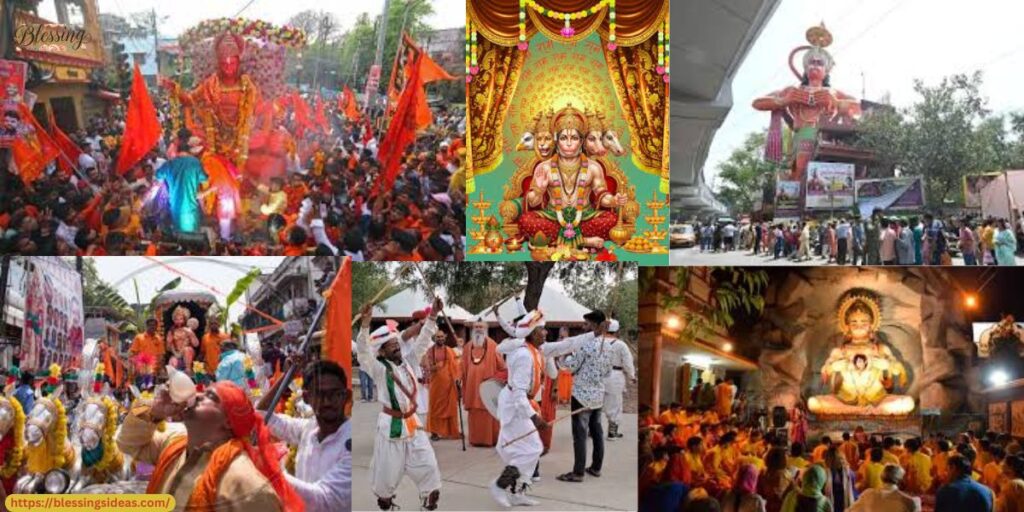
New formats of celebration make devotion accessible to everyone. BlessInsideas embraces both tradition and innovation in worship.
Virtual Temple Darshan and Online Pujas
Major temples now livestream special Jayanti programs. The Hanuman Mandir in Connaught Place, Delhi offers HD live darshan from early morning aarti onward.
Virtual sangats on WhatsApp and Zoom unite devotees from London, Los Angeles, and Singapore in synchronized Chalisa recitation.
Apps like “Hanuman Chalisa Audio” provide lyrics, translations, and audio for every level of devotee.
Eco-Friendly Celebration Ideas
Hanuman’s connection to nature, as Pawanputra, son of the wind, makes environmental devotion fitting. Use cloth flags instead of plastic buntings.
Choose clay diyas over electric lights. Offer organic, locally sourced flowers. Plant a tulsi, banyan, or peepal tree as a birthday gift to the earth.
Prepare prasad in small batches to avoid food waste, that itself honors the principle of gratitude.
Celebrating in the Diaspora
For the global Hindu community, Hanuman Jayanti for diaspora requires intentional planning.
Celebrate at your local sunrise, the spiritual principle transcends time zones. Find the nearest Hindu temple through ISKCON or regional associations.
Create family traditions: stories for children, collective Chalisa reading, special prasad made together. These intimate celebrations are often the most meaningful of all.
Hanuman Jayanti 2026: Cultural and Spiritual Impact
Why do we celebrate Hanuman Jayanti? Because his qualities, courage, loyalty, humility, service, are not just ancient ideals.
They are answers to modern life. BlessInsideas believes this festival’s impact goes far beyond a single day of worship.
Life Lessons from Lord Hanuman
Hanuman as devotee of Lord Ram teaches five timeless lessons:
- Devotion over recognition : Serve without needing applause.
- Strength with humility : True power never needs to intimidate.
- Intelligence in service : Use all your gifts for greater good.
- Resilience through faith : What is meant to harm you can become your greatest victory.
- Loyalty with honesty : Committed support includes truthful feedback.
Why This Hindu Festival Resonates Today
In 2026, with rising anxiety, career pressures, and a search for meaning, mental strength from Hanuman worship is more relevant than ever.
Hanuman, the Sankat Mochan, offers a psychological anchor. Younger generations are rediscovering Bajrangbali, his strength appeals to fitness culture, his devotion to those seeking meaning and his intelligence to students and professionals alike.
The Hindu festival of strength and devotion builds community, passes culture to the next generation and reminds us that selfless service is still the highest calling.
Personal Experience and Recommendation
I have celebrated Hanuman Jayanti for many years, and the single most transformative practice has been early morning Chalisa recitation before the world wakes up. The stillness of Brahma Muhurta makes every verse feel more alive and personal. I strongly recommend starting with just one sincere recitation rather than worrying about doing 11 or 108.
Frequently Asked Questions
When is Hanuman Jayanti in 2026?
Hanuman Jayanti 2026 falls on Thursday, April 2, corresponding to Chaitra Purnima. The most auspicious puja muhurat is 5:30 AM – 7:41 AM.
What is the muhurat for Hanuman Jayanti 2026?
The Purnima Tithi ends at 7:41 AM on April 2, making the entire early morning window — especially sunrise — the most sacred time for puja.
Can I eat fruit during the Hanuman Jayanti fast?
Yes. Phalahar vrat allows fresh fruits, milk, dry fruits, coconut water, and nuts. Avoid grains, salt, onions, and garlic.
Why is Hanuman called Pawanputra?
Hanuman is called Pawanputra because Vayu Dev (the wind god) is his spiritual father, having carried the divine prasad to Anjana Mata before his birth.
How many times should I read Hanuman Chalisa on Jayanti?
Even once with full sincerity is powerful. Traditionally, devotees recite it 11 times across the day. 108 times is for dedicated practitioners.
Conclusion
Hanuman Jayanti 2026 on April 2 is your annual invitation to embody strength, devotion, and humble service. The date, the puja vidhi, and the traditions are all here . But the real celebration happens in your heart. Whether you fast, visit a temple, make besan ladoo, or simply recite the Chalisa once at sunrise, BlessInsideas reminds you: Bajrangbali values sincerity above all. Let this Chaitra Purnima be the day you choose one quality of Sankat Mochan to carry forward into your year. Jai Bajrangbali.

Alich, a skilled content writer with 3+ years of experience, known for creating clear guides and 1000+ published articles across multiple niches.