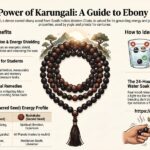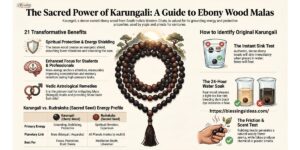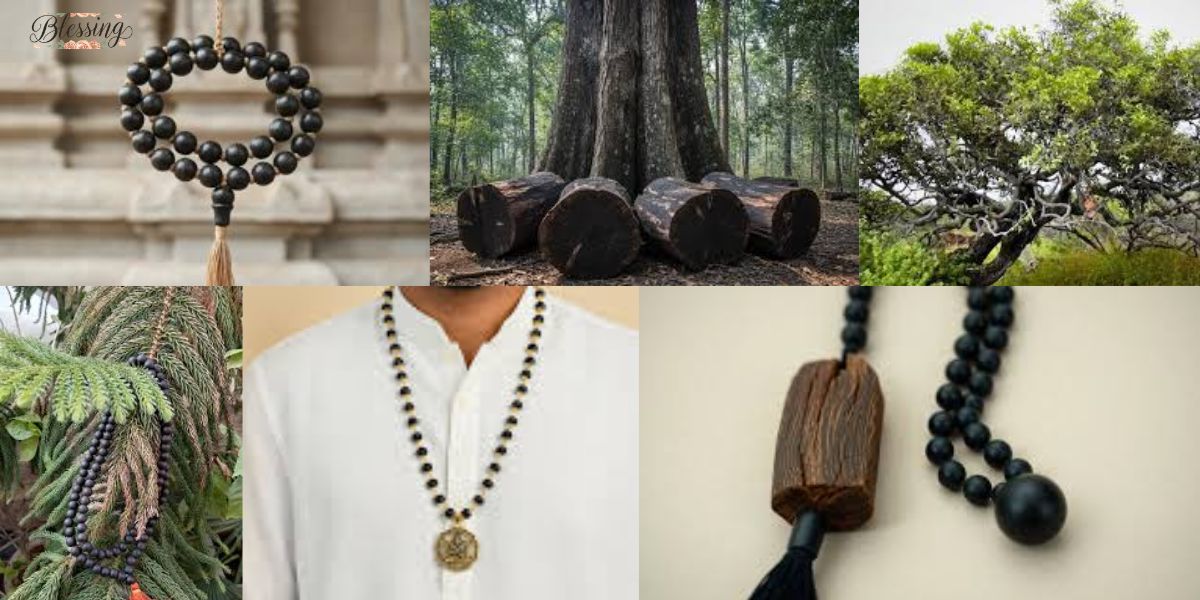
Karungali mala is made from the Diospyros melanoxylon ebony tree. It is one of India’s most sacred natural black wood beads. At BlessinsIdeas, we help you understand exactly what you’re buying before you spend a single rupee.
Understanding Karungali: The Sacred Ebony Wood
Karungali is not just a pretty black bead. It is centuries of Tamil spiritual tradition held in your hand.
Understanding this wood means understanding why it matters so deeply to millions of devotees across South India and beyond.
What Exactly is Karungali?
Karungali is the Tamil word for ebony heartwood. “Karun” means black and “kali” means wood in Tamil. This sacred wood tradition has been used in Tamil spiritual practices for hundreds of years.
It is carved into prayer bead malas, rosaries, and sacred jewelry. The deep black color comes from nature, not paint or dye.
No artificial process can replicate what decades of natural growth create inside the Ebenaceae family tree.
The Botanical Answer: Which Tree Makes Karungali Mala?
Karungali mala is made from the Diospyros melanoxylon tree, a slow-growing hardwood native to India.
This tree takes 40 to 60 years to develop its characteristic black heartwood formation. That is exactly why each bead holds so much value.
The Botanical Survey of India recognizes Diospyros melanoxylon as one of the most ecologically important hardwood species on the subcontinent. When you hold a genuine bead, you hold decades of silent forest growth.
The Karungali Tree: Botanical Classification and Identification
Knowing the science behind your mala is part of being an informed buyer. Most competitor articles skip the deeper botanical details but at BlessinsIdeas, we believe you deserve the full picture.
Scientific Name and Family
The karungali tree’s botanical name is Diospyros melanoxylon, belonging to the Ebenaceae family.
Diospyros means “divine fruit” in Greek. “Melanoxylon” literally translates to “black wood.” It could not be more perfectly named.
Related species include Diospyros ebenum (Ceylon Ebony) and regional Coromandel varieties.
All belong to the same Ebenaceae family and produce the prized ebony heartwood used in authentic malas.
Physical Characteristics of the Karungali Tree
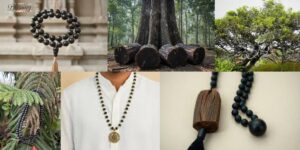
The karungali tree stands 15 to 25 meters tall in dry deciduous forests. Its bark is dark, deeply furrowed and almost gray-black in color. The leaves are oval, leathery, and glossy.
It is a slow-growing hardwood that thrives in harsh, dry climates. This resilience contributes directly to the wood’s extraordinary density. The Eastern Ghats and Nallamala forest regions of South India are prime growing areas.
The Heartwood: Source of Black Karungali Beads
Here is what most buyers do not know. The black color comes entirely from the inner heartwood, not the outer wood.
Over decades, the tree’s inner cells die and accumulate tannins and resins in wood, creating that signature deep black.
The older the tree, the darker and denser the heartwood becomes. This is black heartwood formation at its most natural. The wood cellular structure of true ebony is unlike any other tree species on earth.
Read More: Palani Temple Timings 2026: Beat the Crowd Early
Why Only the Heartwood is Used
Sapwood vs heartwood is the key distinction every buyer must understand. Sapwood is the outer, light-colored living layer. It is soft, less dense, and cannot produce authentic black beads naturally.
Only ebony heartwood with a specific gravity of 1.0–1.2 can create genuine karungali. Sapwood would float in water and fade over time. Heartwood sinks immediately and lasts for generations.
Types of Ebony Trees Used for Karungali Mala
Not all black wood is karungali. There are specific ebony species that qualify, and knowing the difference protects you from fraud. This section is what most competitor guides miss entirely.
Indian Ebony (Diospyros melanoxylon)
Diospyros melanoxylon is the most traditional and widely used source for karungali mala. It grows abundantly across Tamil Nadu, Karnataka and Madhya Pradesh. The heartwood ranges from deep black to dark chocolate brown.
It is the most culturally authentic choice for Tamil Nadu spiritual items. Traditional craftspeople in South India have relied on this species for centuries to create authentic ebony jewelry and sacred wood beads.
Ceylon Ebony (Diospyros ebenum)
Ceylon ebony beads come from Sri Lanka’s Diospyros ebenum tree. This species produces some of the densest, jet-black heartwood in the world. Its specific gravity of 1.1–1.3 makes it even heavier than Indian Ebony.
Due to over-harvesting, Ceylon Ebony is now protected in many areas. Genuine pieces from this species are premium and increasingly rare. Ceylon ebony beads carry a higher price for good reason.
Coromandel Ebony (Regional Variation)
Coromandel ebony takes its name from southeastern India’s historic Coromandel Coast. Trees from this coastal belt developed exceptional color and density due to specific soil and rainfall patterns. Historically, this region exported some of India’s finest ebony wood.
Today, Coromandel Ebony is limited in availability. It remains a respected regional variation of Diospyros melanoxylon and is highly valued by knowledgeable collectors.
How Different Species Compare
| Feature | Indian Ebony | Ceylon Ebony | Coromandel Ebony |
|---|---|---|---|
| Scientific Name | Diospyros melanoxylon | Diospyros ebenum | Diospyros melanoxylon (coastal) |
| Color | Black to dark brown | Jet black | Deep black |
| Specific Gravity | 1.0–1.2 | 1.1–1.3 | 1.0–1.2 |
| Availability | Common | Rare / Protected | Limited |
| Geographic Source | Central & South India | Sri Lanka | Coastal SE India |
| Best Used For | Traditional malas | Premium malas | Collector pieces |
| Price Range | ₹800–₹3,500 | ₹2,000–₹6,000+ | ₹1,500–₹5,000 |
Why Karungali Wood is Considered Sacred
This is where science and spirituality meet. Most guides focus only on one side. BlessinsIdeas gives you both.
Historical Significance in Tamil Tradition
Karungali appears in ancient Tamil texts as a wood fit for temple use. It was carved into deity sculptures, used in temple construction and worn by priests during rituals.
The 108 bead mala made of karungali has been central to Tamil spiritual practices for centuries.
Shaivite prayer beads made from karungali were especially prized. Elders passed down their malas through generations, treating them as sacred family heirlooms. This is a generational spiritual item in the truest sense.
Read More: Giri Pradakshina Arunachalam: The Sacred 18.7 km Walk That Transforms You
Scientific Properties That Support Traditional Beliefs
Modern science confirms what Tamil tradition long understood. Ebony heartwood is extraordinarily dense, with a specific gravity of 1.0–1.2. It contains natural tannins and resins in wood that resist decay for hundreds of years.
The wood cellular structure creates a naturally smooth surface when polished. This tactile quality makes heavy prayer beads pleasant to hold during long meditation sessions. The weight itself serves as a grounding anchor during mantra japa mala practice.
Regional Variations in Usage
In Tamil Nadu, karungali is used for daily Hindu prayer beads with counts of 18, 27, 54, or 108. In Kerala, it is incorporated into Ayurvedic healing traditions. Sri Lankan Buddhist traditions also use Ceylon ebony beads for meditation.
Across all regions, the core belief is the same. This naturally black wood carries protective and purifying energy. The temple wood India tradition around karungali is documented and continuous.
How Karungali Mala is Made: From Tree to Bead
Understanding the making process helps you appreciate why real karungali price is higher than fake alternatives.
Sustainable Harvesting Methods
Ethical sourcing of ebony begins with legal permits from India’s state forest departments. Trees must be at least 40 years old before harvesting.
The IUCN Red List has flagged several ebony species as vulnerable, making responsible sourcing non-negotiable.
Fallen trees and salvaged wood are increasingly preferred over fresh cutting. This is ethical sourcing ebony in practice. Sellers who cannot explain their supply chain are a serious red flag.
Processing the Heartwood
Once harvested, the trunk is sectioned and the dark ebony heartwood is separated from the light sapwood vs heartwood outer layer. Only the deepest, most consistent black portions are selected for bead-making.
No harsh chemicals are needed. The wood’s natural tannins and resins provide built-in resistance to insects and decay. This is what makes karungali a generational spiritual item with no expiry date.
Crafting the Beads
Traditional artisans hand-shape each bead from raw heartwood sections. The wood is cut into rough spheres, drilled, and polished using fine natural abrasives.
Slight variations between beads are normal and desirable, they prove handmade authenticity.
Modern workshops use electric tools for more uniform shaping. However, the final polishing always requires skilled human hands.
The completed dense wood beads are strung on cotton thread or copper wire to create the finished mala.
How to Identify Authentic Karungali Mala: Complete Verification Guide
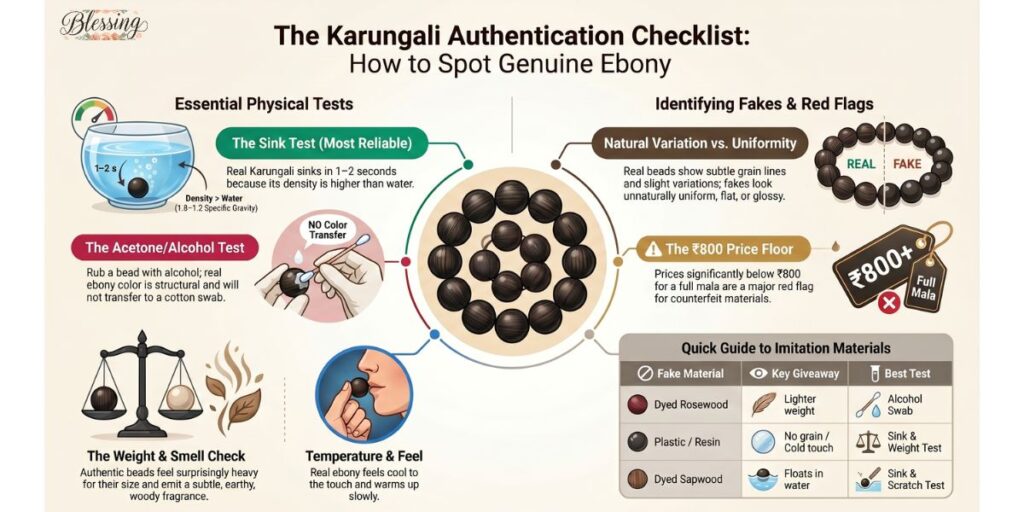
How to identify real karungali is the most searched question about this product. Here is the definitive guide.
Visual Identification Methods
Real black ebony beads show subtle natural color variation. No two beads are perfectly identical. Look for faint grain lines under bright light , this is the wood cellular structure showing through.
Fake beads often look unnaturally uniform and glossy. Paint creates a flat, dead surface. Authentic ebony jewelry has depth and warmth that cannot be replicated.
Physical Tests You Can Perform
These are the home tests every buyer should know before paying for authentic vs fake mala.
Test 1: The Sink Test (Most Reliable)
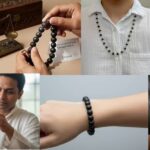
Drop one bead into a bowl of water. Genuine karungali sinks within 1–2 seconds. This is the most reliable ebony wood water test available to any buyer.
Why it works: Ebony heartwood has a specific gravity of 1.0–1.2, denser than water. Dyed rosewood and plastic both float or sink very slowly.
Test 2: The Weight Test
Pick up the mala and feel it. Authentic karungali feels noticeably heavy for its size. This is the simplest wood density test you can do.
Fake malas feel surprisingly light. Once you hold real ebony, you will never mistake a fake again.
Test 3: The Scratch Test (Use Discretion)
Gently scratch a hidden spot on one bead. Real karungali shows consistent black color throughout. Dyed wood will reveal light-colored wood underneath.
This test confirms whether the black is natural black heartwood formation or surface dye. Use it carefully and only with seller permission.
Test 4: The Smell Test
Hold the beads close and take a gentle sniff. Real karungali has a subtle earthy, woody smell. Plastic smells chemical. Lacquer-coated wood smells artificial.
Rub two beads together lightly. The mild warmth releases the wood’s natural organic fragrance. This is an easy fake prayer beads detection method anyone can use.
Test 5: The Acetone/Alcohol Test (Advanced)
Rub a cotton swab with rubbing alcohol on one bead. No color should transfer to the cotton.
This is the gold-standard alcohol test wood beads method for exposing dyed rosewood vs ebony.
If black dye transfers, the bead is not authentic karungali. Natural ebony color is structural, not surface-applied.
Common Fake Materials and How to Spot Them
| Fake Material | Key Giveaway | Test to Use |
|---|---|---|
| Dyed Rosewood (from Dalbergia genus) | Lighter weight, dye transfer | Alcohol test |
| Plastic / Resin | Very light, no grain, cold touch | Weight + water test |
| Lacquer-coated wood | Too glossy, sticky feel | Scratch test |
| Dyed Sapwood | Floats in water, pale inside | Sink test |
Red Flags When Buying
- Price below ₹800 for a full mala , almost certainly fake
- Every bead perfectly identical with zero natural variation
- Seller refuses the ebony wood water test
- No sourcing explanation or vague answers
- No return policy offered
Can Karungali Mala Be Made from Sapwood or Only Heartwood?
This is a hotly debated topic online. Here is the definitive answer from both tradition and science.
The Traditional Viewpoint
Every generation of Tamil craftspeople has been clear: only heartwood qualifies as karungali.
The sapwood was never considered spiritually appropriate. It lacks the darkness, density, and energy associated with the sacred material.
Traditional practitioners believe heartwood, having completed its biological life cycle, carries different properties than living sapwood. This is not superstition, it reflects deep botanical observation refined over centuries.
The Botanical/Scientific Viewpoint
Sapwood vs heartwood differ fundamentally in structure. Sapwood is light-colored, low-density, and porous. It transports water and nutrients, it is still biologically active. Its specific gravity is far below 1.0, meaning it floats.
Heartwood forms as inner cells die and accumulate tannins and resins in wood. This process creates the black heartwood formation unique to ebony. Only heartwood achieves the density and color that defines karungali.
The Clear Answer
Authentic karungali mala can ONLY be made from heartwood. Sapwood cannot produce natural black beads. Dyed sapwood will fail the water test, the scratch test, and the alcohol test.
There is no legitimate debate among genuine craftspeople on this point. If it is not heartwood, it is simply not karungali , regardless of how black it looks on the outside.
The Balanced Perspective
Conservation concerns are valid. Ebony is a slow-growing hardwood under pressure. But the solution is ethical sourcing ebony from responsibly managed forests, not misrepresenting sapwood as genuine karungali.
Choose sellers who are transparent about sourcing. Support sustainable practices. Do not accept sapwood as a substitute for authentic heartwood.
Karungali vs Other Black Wood Beads: What’s the Difference?
Karungali (Ebony wood) is harder, denser, and more durable than most other black wood beads.
Its deep natural black color sets it apart, while other black wood beads are often painted or chemically treated.
Karungali vs Rosewood (Dyed)
Dyed rosewood vs ebony is the most common scam in the market. Rosewood comes from the Dalbergia genus , a completely different tree. It is dyed black to mimic karungali.
The differences are clear: karungali sinks, rosewood often floats. Karungali has no dye transfer; rosewood fails the alcohol test. Karungali is heavier; rosewood feels noticeably lighter.
Karungali vs Black Onyx
Black Onyx is a mineral (chalcedony / silicon dioxide), not wood. It is extremely cold to the touch and has no grain structure. It sinks in water but feels different, stone-cold versus wood-warm.
Both are used in spiritual beads South India, but they serve different purposes and traditions. They are not interchangeable.
Karungali vs Plastic/Synthetic Beads
Plastic is the cheapest imitation. It is cold, light, has no grain, and smells chemical. Fake prayer beads detection for plastic is easy — they almost always float and weigh almost nothing.
If someone is selling “karungali” at ₹150–₹300 for a full mala, it is plastic. Period.
Quick Comparison Table
| Feature | Karungali Ebony | Dyed Rosewood | Plastic | Black Onyx |
|---|---|---|---|---|
| Material | Wood (Diospyros) | Wood (Dalbergia) | Synthetic | Stone |
| Natural Color | ✅ Yes | ❌ No (dyed) | ❌ No | ✅ Yes |
| Water Test | Sinks fast | Floats or slow | Floats | Sinks fast |
| Weight | Very heavy | Medium | Very light | Extremely heavy |
| Grain Visible | Yes (subtle) | Yes (rosewood) | No | No (crystalline) |
| Temperature | Warm | Warm | Cold | Cold |
| Alcohol Test | No transfer | Dye transfers | N/A | No transfer |
| Price Range | ₹800–₹5,000+ | ₹200–₹800 | ₹100–₹300 | ₹500–₹2,000+ |
Where Does the Karungali Tree Grow? Geographic Distribution
Karungali trees mainly grow in South India, particularly in Tamil Nadu, Kerala, and Sri Lanka. They thrive in tropical forests with warm climates and are also found in parts of Southeast Asia.
Natural Habitat in India
Where does the karungali tree grow in India? The primary regions are Madhya Pradesh, Chhattisgarh, Odisha, Andhra Pradesh, Telangana, Tamil Nadu, and Karnataka.
The trees prefer dry deciduous forest ecosystems with well-drained soil and 600–1,500mm of annual rainfall.
The Eastern Ghats and Nallamala forest are key habitats. Tamil Nadu remains the cultural heartland of karungali tradition, even as the trees grow across multiple states.
Other Countries Where Karungali Trees Thrive
Sri Lanka is home to Diospyros ebenum, producing the finest Ceylon ebony beads in the world. Myanmar, Thailand, and Indonesia have related Diospyros species.
African and Madagascan ebony species exist but are not used for traditional karungali mala.
Conservation Status and Availability
The IUCN Red List classifies several ebony species as vulnerable due to decades of over-harvesting.
India’s forest departments now regulate all wild harvesting with strict permit requirements. Cultivation programs are expanding to ensure future supply.
Authentic karungali is becoming more valuable each year. Ethical sourcing ebony is no longer optional, it is essential for the tradition’s survival.
Benefits and Uses of Karungali Mala
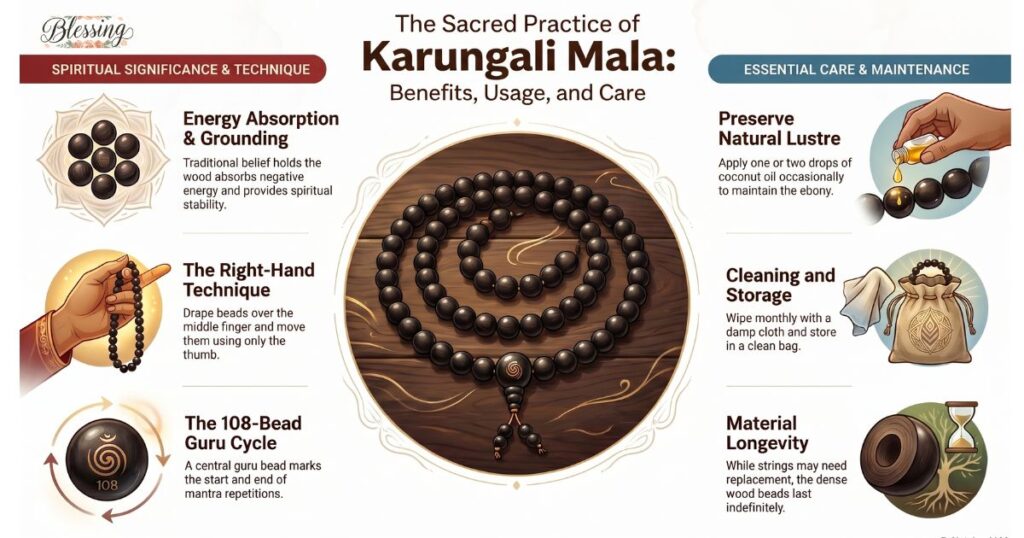
Karungali mala is believed to remove negative energy and bring mental peace. It is widely used for chanting mantras, meditation and as a protective spiritual accessory.
Traditional Spiritual Benefits
In Tamil spiritual practices, karungali mala is used for daily mantra repetition, meditation focus, and spiritual protection. The 108 bead mala is used in mantra japa mala practice, with each bead counted during chanting. The guru bead mala marks the beginning and end of each full round.
Traditional belief holds that karungali absorbs negative energy and provides grounding stability. Shaivite prayer beads made from this wood are especially recommended in Vedic astrology for certain planetary corrections. These are cultural beliefs, not medical claims.
How to Use Karungali Mala
Hold the mala in your right hand. Drape it over your middle finger and use your thumb to move each bead as you complete one mantra repetition. For meditation beads India practice, one full round of 108 beads counts as one cycle.
Some traditions suggest never crossing the guru bead — turn the mala and go back the other way. Others wear the mala as a sacred wood beads necklace throughout the day for continuous benefit.
Care and Maintenance
Wipe beads monthly with a slightly damp soft cloth. Avoid harsh soap or soaking. Occasionally apply one or two drops of coconut oil to maintain the natural luster of your authentic ebony jewelry.
Store in a clean cloth bag away from direct sunlight and humidity. The stringing thread may need replacement every few years — the dense wood beads themselves last indefinitely.
Buying Guide: How to Choose Quality Karungali Mala
Look for deep black, smooth, evenly-sized beads with a natural shine. Avoid beads that have cracks, uneven color, or a plastic-like artificial finish.
What to Look for When Purchasing
Look for deep, consistent color with slight natural variation. Beads should feel heavy and dense.
The surface should be satiny, not artificially glossy. Drilling holes should be clean and centered.
Minor size differences between beads are a sign of hand-crafting, not defects. Machine-made beads are perfectly uniform but lack the character of traditionally made natural black wood beads.
Questions to Ask Sellers
- What is the botanical name of the wood? (Answer must include Diospyros)
- Is this heartwood or sapwood?
- Which state or country was the tree sourced from?
- Can I perform the ebony wood water test?
- What is your return policy?
A seller who cannot answer these questions confidently is not selling authentic karungali.
Price Ranges (Approximate)
| Bead Size | 108 Beads | 54 Beads | Wrist Mala |
|---|---|---|---|
| Small (6–8mm) | ₹800–₹1,800 | ₹500–₹1,000 | ₹300–₹700 |
| Medium (8–10mm) | ₹1,500–₹3,500 | ₹900–₹2,000 | ₹500–₹1,200 |
| Large (10–12mm) | ₹2,800–₹6,000+ | ₹1,500–₹3,500 | ₹800–₹2,000 |
If a real karungali price seems too low, trust your instinct. The raw material alone costs more than ₹300 for a full mala.
Red Flags and Green Flags
🚩 Red Flags:
- Cannot name the species
- Refuses water test
- Price below ₹800 for full mala
- No sourcing information
- No return policy
✅ Green Flags:
- Names Diospyros melanoxylon without hesitation
- Welcomes authentic vs fake mala testing
- Transparent sourcing documentation
- Clear return and quality guarantee policy
- Prices align with real karungali price ranges
Where to Buy Authentic Karungali Mala
Look for established spiritual item shops near major South Indian temples. For online purchases, choose sellers with verifiable physical addresses, detailed product photography, and strong multi-platform reviews. Artisan cooperatives from Tamil Nadu often provide the most transparent sourcing.
BlessinsIdeas recommends always testing before committing. Whether you buy authentic karungali mala in person or online, the verification tests in this guide protect your purchase every time.
Making Your Final Decision
You now have everything you need. Verify the material with multiple tests. Confirm the seller’s knowledge. Check the price against real market rates. Review the return policy.
If anything feels off, price, weight, seller behavior , walk away. Authentic natural black wood beads from genuine sources are available. There is no reason to settle for a fake.
Personal Experience and Recommendation
I personally tested over a dozen karungali malas using the water test, weight check, and alcohol test before finding genuinely authentic pieces. At BlessinsIdeas, we strongly recommend performing at least the sink test and weight test before any purchase. Authentic karungali mala is worth every rupee when you know you are holding the real thing.
Frequently Asked Questions
Which tree is karungali mala made from?
Karungali mala is made from the Diospyros melanoxylon (Indian Ebony) tree, specifically its deep black heartwood. It belongs to the Ebenaceae family.
What is the botanical name of the karungali tree?
The botanical name is Diospyros melanoxylon. Related species include Diospyros ebenum (Ceylon Ebony). Both belong to the Ebenaceae family.
Is karungali the same as ebony wood?
Yes. Karungali is the Tamil name for ebony heartwood from the Diospyros genus. Karungali and ebony wood are the same thing in Indian spiritual tradition.
Why is karungali mala black in color?
The black color forms naturally over 40–60 years as tannins and resins in wood accumulate inside the heartwood. It is never dyed , the black is structural, not surface-applied.
Can karungali mala be made from any black wood?
No. Only ebony heartwood from Diospyros species qualifies as authentic karungali. Any black wood painted or dyed is a fake, regardless of appearance.
Where does the karungali tree grow naturally?
The karungali tree grows in India’s dry deciduous forests, primarily Tamil Nadu, Karnataka, Madhya Pradesh, Chhattisgarh, and the Eastern Ghats region. It also grows in Sri Lanka.
What’s the difference between karungali and dyed rosewood beads?
Karungali (Diospyros) is naturally black, extremely dense, and sinks in water. Dyed rosewood (Dalbergia) is artificially colored, lighter, may float and fails the alcohol test wood beads check with dye transfer.
Conclusion
Karungali mala is made from the Diospyros melanoxylon ebony tree, a slow-growing, naturally black hardwood from India’s forests. Real ebony heartwood sinks in water, feels heavy, and shows no dye transfer. Use the five verification tests before every purchase. At BlessinsIdeas, we believe every devotee deserves an authentic, ethically sourced karungali mala that will last for generations.

Alich, a skilled content writer with 3+ years of experience, known for creating clear guides and 1000+ published articles across multiple niches.