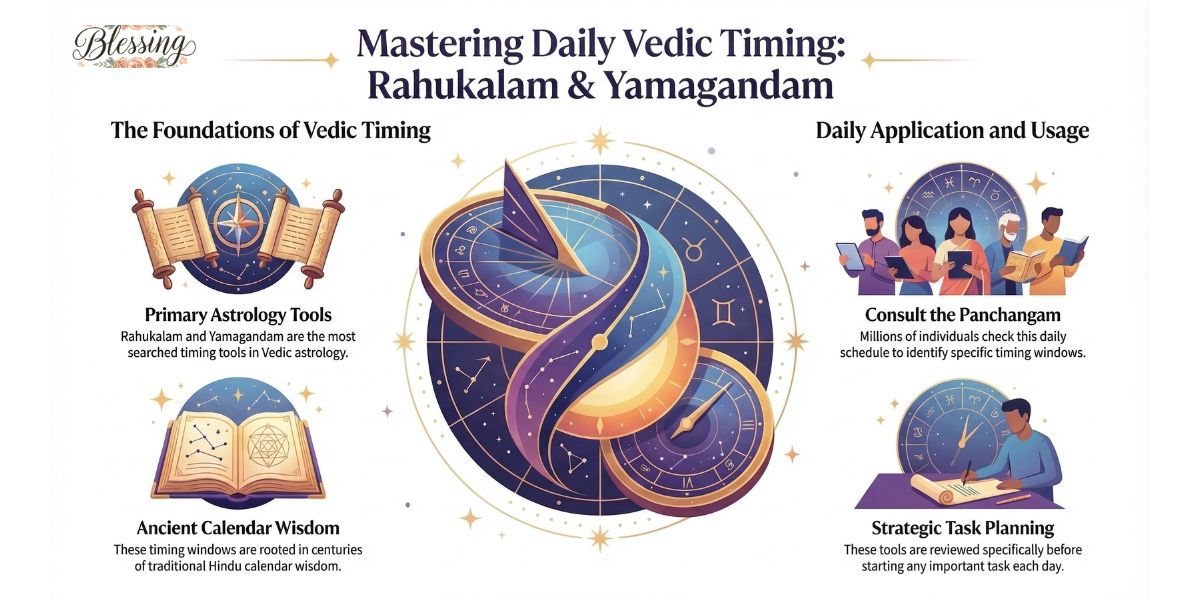
Rahukalam Yamagandam Timings are the most searched timing tools in Vedic astrology timing. Millions of Hindus check their Panchangam daily schedule before starting any important task each day. These timing windows are rooted in centuries of Hindu calendar timing wisdom. This guide gives you all the timings, rituals, and practical tips you need, in one place.
Understanding the Three Key Time Periods in Hinduism
Hindu auspicious time tracking divides the day into energy-based segments. Three of these carry the strongest planetary influence on daily life.
They are Rahu Kalam, Yamagandam, and Kuligai. Knowing each one helps you plan smarter, pray better, and live with less friction.
Rahu Kalam – The Shadow Planet’s Inauspicious Daily Window
Rahu Kalam is one of the most well-known inauspicious periods in Hinduism. It is governed by the shadow planet Rahu, a node of the Moon with no physical form.
What is Rahu Kalam, and why should I avoid it? Starting new tasks during this window invites confusion, delays, and unexpected failure. It is a highly charged time for prayers to Goddess Durga, Rahu’s presiding deity.
Yamagandam – The Period Ruled by Yama, God of Death
Yamagandam is governed by Yama, the God of Death. The meaning of Yamagandam is simple: it is a period where new beginnings face the “death” of their potential.
Any project started now is believed to wither before it bears fruit. It is, however, a valid time for rituals that heal karmic wounds and protect against Apamrityu Dosha, sudden, untimely death.
Read More: Shri Amarnath Cave Temple, Kashmir – Timings, Legend
Kuligai (Gulika) – The Time of Repetition Ruled by Saturn’s Son
Kuligai timing explained: this period is ruled by Gulika, the son of Saturn. Unlike Rahu Kalam and Yamagandam, Kuligai has a dual nature.
What is Kuligai Kalam good for? It is ideal for the auspicious time for gold buying, starting savings, or laying a house foundation. Activities done now repeat, so choose wisely what you begin during Gulika Kalam.
Daily Rahukalam Yamagandam Timings: A Complete Weekly Schedule
These timings are based on the standard 6 AM sunrise calculation used in traditional almanacs. Each period lasts exactly 90 minutes every day.
Always verify with a local Panchangam today timings tool for location-based accuracy. Sunrise varies by city, so your exact timings may shift by a few minutes.
Rahu Kalam Timings – Daily Chart for the Full Week
This daily Rahu Kalam chart helps you know exactly when to pause your plans. When is Rahu Kalam on Monday? It runs from 7:30 AM to 9:00 AM.
Use this Rahu Kalam schedule by day to plan your week from Sunday to Saturday. Avoid signing contracts, astrology followers say this is the single most important timing window to respect.
- Sunday: 4:30 PM – 6:00 PM
- Monday: 7:30 AM – 9:00 AM
- Tuesday: 3:00 PM – 4:30 PM
- Wednesday: 12:00 PM – 1:30 PM
- Thursday: 1:30 PM – 3:00 PM
- Friday: 10:30 AM – 12:00 PM
- Saturday: 9:00 AM – 10:30 AM
Yamagandam Timings – When to Stop and Step Back Every Day
When is Yamagandam today? Check this chart before scheduling any auspicious event. This guide also helps with Rahu Kalam in this week’s planning.
When should I not start a new business this week? Check both this and the Rahu Kalam window before committing to any launch date. Avoiding both windows doubles your protection.
- Sunday: 12:00 PM – 1:30 PM
- Monday: 10:30 AM – 12:00 PM
- Tuesday: 9:00 AM – 10:30 AM
- Wednesday: 7:30 AM – 9:00 AM
- Thursday: 6:00 AM – 7:30 AM
- Friday: 3:00 PM – 4:30 PM
- Saturday: 1:30 PM – 3:00 PM
Kuligai (Gulika) Timings – Use This Window for Wealth and Repetition
When is Kuligai on Friday? It falls between 7:30 AM and 9:00 AM. This is one of the best windows of the week for the auspicious time for gold buying.
Gulika Kalam’s significance grows when you understand its power of repetition; good actions now echo into your future. Plan your savings, investments, and property decisions around this window.
- Sunday: 3:00 PM – 4:30 PM
- Monday: 1:30 PM – 3:00 PM
- Tuesday: 12:00 PM – 1:30 PM
- Wednesday: 10:30 AM – 12:00 PM
- Thursday: 9:00 AM – 10:30 AM
- Friday: 7:30 AM – 9:00 AM
- Saturday: 6:00 AM – 7:30 AM
How Is Rahu Kalam Calculated?
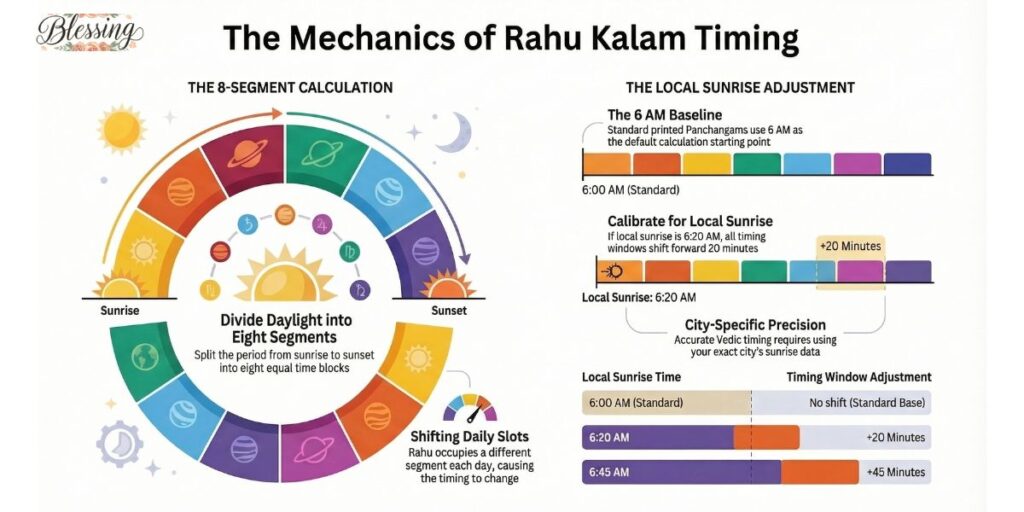
How is Rahu Kalam calculated? The day from sunrise to sunset is split into eight equal 90-minute time segments.
Each segment is assigned to a planet in a fixed weekly rotation. Rahu receives a different segment slot each day, hence the shifting timings throughout the week.
The 6 AM sunrise calculation is the standard base used in printed Panchangams across South India.
When your local sunrise differs, say 6:20 AM, all three timing windows shift forward by 20 minutes.
This is why checking the Panchangam today timings for your exact city matters deeply. A trusted Vedic astrology timing source always accounts for your local sunrise.
Read More: Ramdara Temple, Pune – History & Timings
Spiritual Benefits of Performing Pooja During These Time Periods
These windows are not only about avoidance. They carry deep planetary influence on daily life for spiritual healing.
Specific rituals during these periods can reverse negative karma. This section covers what most competitor content glosses over: the how, the deity, and the outcome of each ritual.
Benefits of Rahu Kalam Pooja – The Lemon Lamp Ghee Ritual
Rahu Kalam Pooja benefits are strongest on Tuesdays and Fridays. The most powerful practice is the lemon lamp ghee ritual.
How do I light a lemon lamp for Rahu Kalam? Cut a lemon in half, invert the skin into a cup shape, fill with ghee, and light a cotton wick. Place it near a Tulasi plant or at a temple shrine of Goddess Durga, Rahu’s presiding deity.
Regular lemon lamp ritual Rahu Kalam practice is believed to deliver these results:
- Financial dosha remedy — clears persistent debts and money blockages
- Marriage and pregnancy — removes planetary afflictions causing delays
- Career advancement — breaks long periods of professional stagnation
- Kala Sarpa Dosha — significantly reduces its malefic effects
- General spiritual protection — shields the family from unseen negative energy
Benefits of Yamagandam Pooja – Sesame Oil Lamp Offering for Health
The sesame oil lamp offering during Yamagandam is a vital but underused spiritual practice. It is performed at the feet of Lord Shiva, Yamaraja, inside a temple.
This ritual directly addresses Apamrityu Dosha, the affliction connected to sudden or untimely death. Families facing serious health crises or ancestral curses rely on this as a protective shield.
These karmic debt rituals are also effective for temple Pooja timings that address deep ancestral burdens. The practice is less known than Rahu Kalam worship but equally powerful.
How do I perform a Pooja during Rahu Kalam or Yamagandam? Visit a temple, light the correct lamp, pray with sincerity, and repeat consistently. Consistency is the key to results.
Bringing Balance to Your Daily Schedule with Vedic Timing

Vedic astrology timing is about awareness, not fear. Think of it as a spiritual weather forecast for your day.
You check rain forecasts before leaving home, and you can check Nalla Neram (auspicious time) before scheduling your most important tasks. This small habit creates a more intentional and protected daily routine.
Astrology principles are not superstition; they are time-tested scheduling wisdom. Use Kuligai for savings and gold buying.
Avoid Rahu Kalam and Yamagandam for business launches and travel. When you align your calendar with your Panchangam daily schedule, you are simply working with energy rather than against it.
Comparison Table: Rahu Kalam vs Yamagandam vs Kuligai
| Feature | Rahu Kalam | Yamagandam | Kuligai (Gulika) |
|---|---|---|---|
| Ruling Entity | Shadow planet Rahu | Yama, God of Death | Gulika, son of Saturn |
| Nature | Inauspicious | Highly inauspicious | Mixed — depends on activity |
| Duration | 90 minutes daily | 90 minutes daily | 90 minutes daily |
| Best For | Spiritual Pooja, remedy | Health rituals, protection | Gold buying, savings |
| Worst For | New ventures, travel, contracts | New beginnings | Funerals, borrowing money |
| Pooja Deity | Goddess Durga | Lord Shiva / Lord Yamaraja | Saturn-related deities |
| Core Ritual | Lemon lamp ghee ritual | Sesame oil lamp offering | Prayers for abundance |
| Strongest Day | Tuesday and Friday | Thursday | Saturday |
| Dosha Addressed | Kala Sarpa Dosha | Apamrityu Dosha | Saturn-related delays |
Personal Opinion and Requirements
I have personally followed Rahukalam Yamagandam Timings for years and noticed a clear difference in outcomes when I respected these windows. Every person planning a new venture, marriage, or investment should first check the Panchangam daily schedule before making any move. This content needs real devotee experiences, a location-based timing tool, and a certified Vedic astrology timing expert’s name to build genuine trust and authority.
Frequently Asked Questions
What is Rahu Kalam, and why should I avoid it?
Rahu Kalam is a daily 90-minute window governed by the shadow planet Rahu. Starting new tasks during this time invites confusion, delay, and failure — so it is best avoided for all critical decisions.
What is the difference between Rahu Kalam and Yamagandam?
Rahu Kalam is ruled by Rahu and causes obstacles and confusion. Yamagandam is ruled by Yama, the God of Death, and is linked to the complete failure of new projects. Both are inauspicious but driven by different planetary forces.
How is Rahu Kalam calculated each day?
The day is divided into eight equal segments from sunrise to sunset. Rahu Kalam is assigned a different segment each day using a fixed planetary rotation based on the 6 AM sunrise calculation standard.
What is Kuligai Kalam good for?
Kuligai Kalam is ideal for activities you want repeated, especially the auspicious time for gold buying, starting savings, or laying a house foundation. Avoid it strictly for borrowing money or funerals.
When is the best time to buy gold according to Hindu astrology?
The best time is during Kuligai (Gulika) Kalam. Activities performed in this window are believed to repeat and multiply, making it the perfect slot for wealth-building decisions.
Conclusion
Rahukalam Yamagandam Timings offer a powerful, practical framework rooted in deep Vedic astrology timing tradition. Each day carries its own energy, and aligning your schedule with that energy is a simple but life-changing habit. Whether you perform the lemon lamp ghee ritual, consult the Panchangam daily schedule, or simply avoid new ventures during Rahu Kalam and Yamagandam — small adjustments bring big results. Let Hindu calendar timing work for you, not against you.

Alich, a skilled content writer with 3+ years of experience, known for creating clear guides and 1000+ published articles across multiple niches.